A starting point that fits.
Begin with walk-run intervals or an appropriate entry point for you, with clear effort and recovery guidance.
Running athlete experts in Centennial + Highlands Ranch, CO
The Running Comeback Program
A clear plan. Measurable progress. Confidence for the next mile. With support every step of the way.
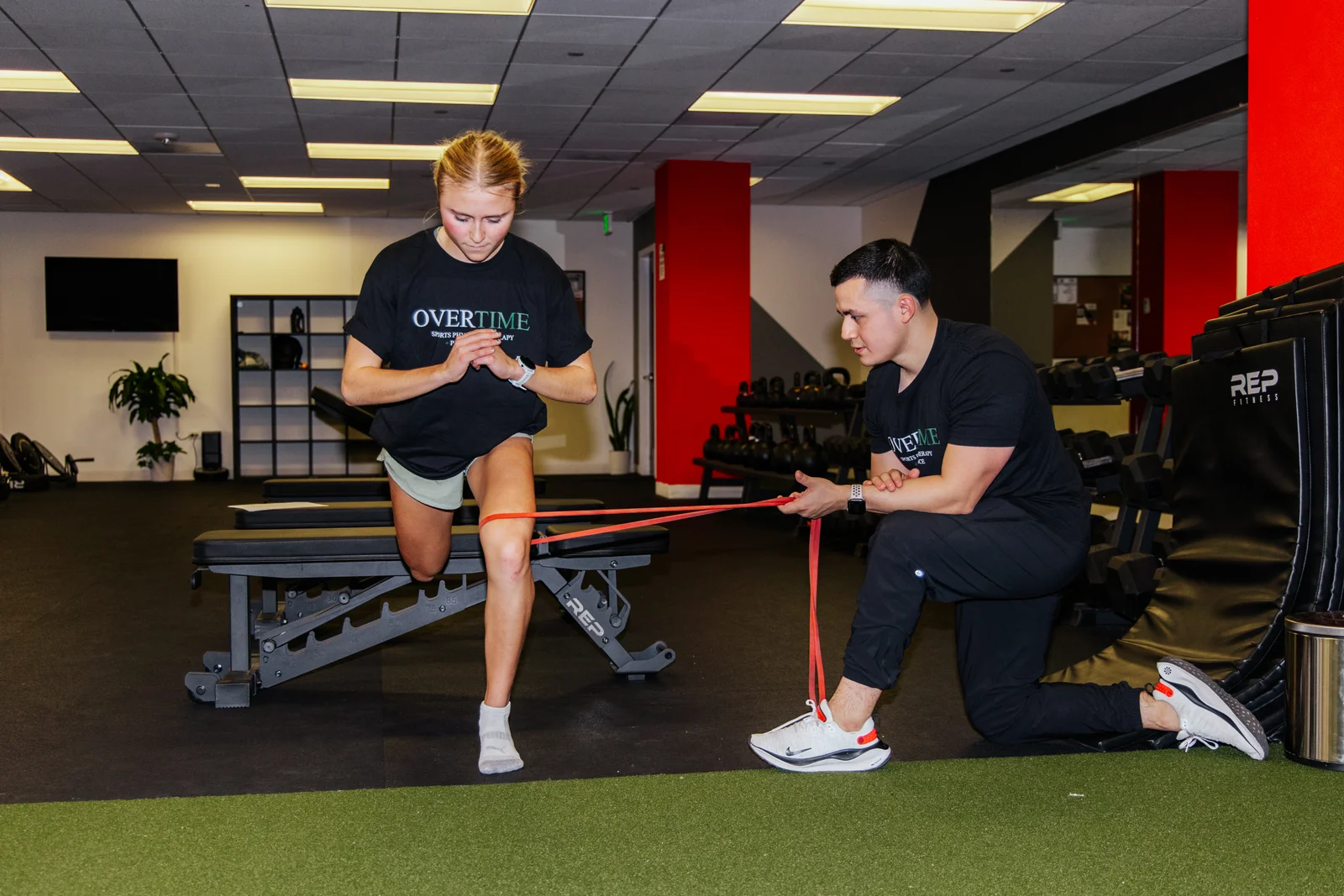
One-on-one Sports PT that connects strength, plyometrics, force-absorption tolerance, and a personalized return to running, with support at every stage.
Start with a free, 15-minute phone consultation.
Sidelined from running. Still a runner.
The morning routine. Your training partners. The feeling of finding your stride.
Whether you're coming back from a bone stress reaction, fracture, or another running injury, it's hard to know how much is enough, when to progress, or what a symptom means.
We build a plan around your injury, your readiness, and your goals, so the next step feels less uncertain.
The comeback roadmap
A progressive benchmark approach — each phase is earned, not forced.
Each phase builds the foundation for the next: measured, intentional, and never rushed.
Assess and restore
Understand your injury, current restrictions, and running goals while respecting healing and medical guidance.
Rebuild capacity
Progressively load the calf, hip, and lower extremity to rebuild strength and single-leg control.
Prepare for impact
Connect single-leg strength with the ability to handle repeated impact. Introduce loading appropriate for your healing and readiness.
Reintroduction to running
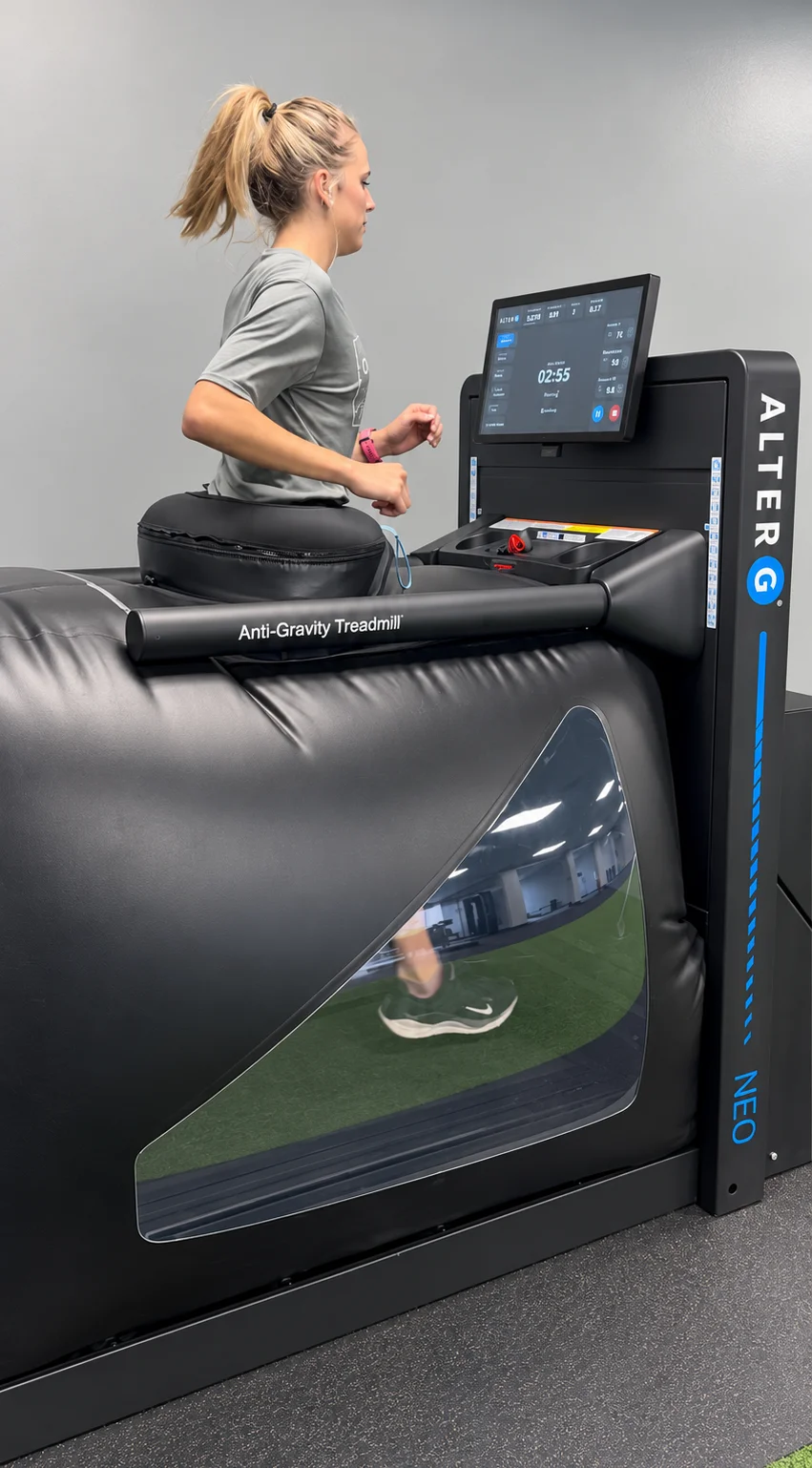
Introduce running gradually, using the AlterG when appropriate to build exposure with adjustable body-weight support.
Rebuild your miles
Progress land running and increase mileage based on training and recovery responses, not a calendar alone.
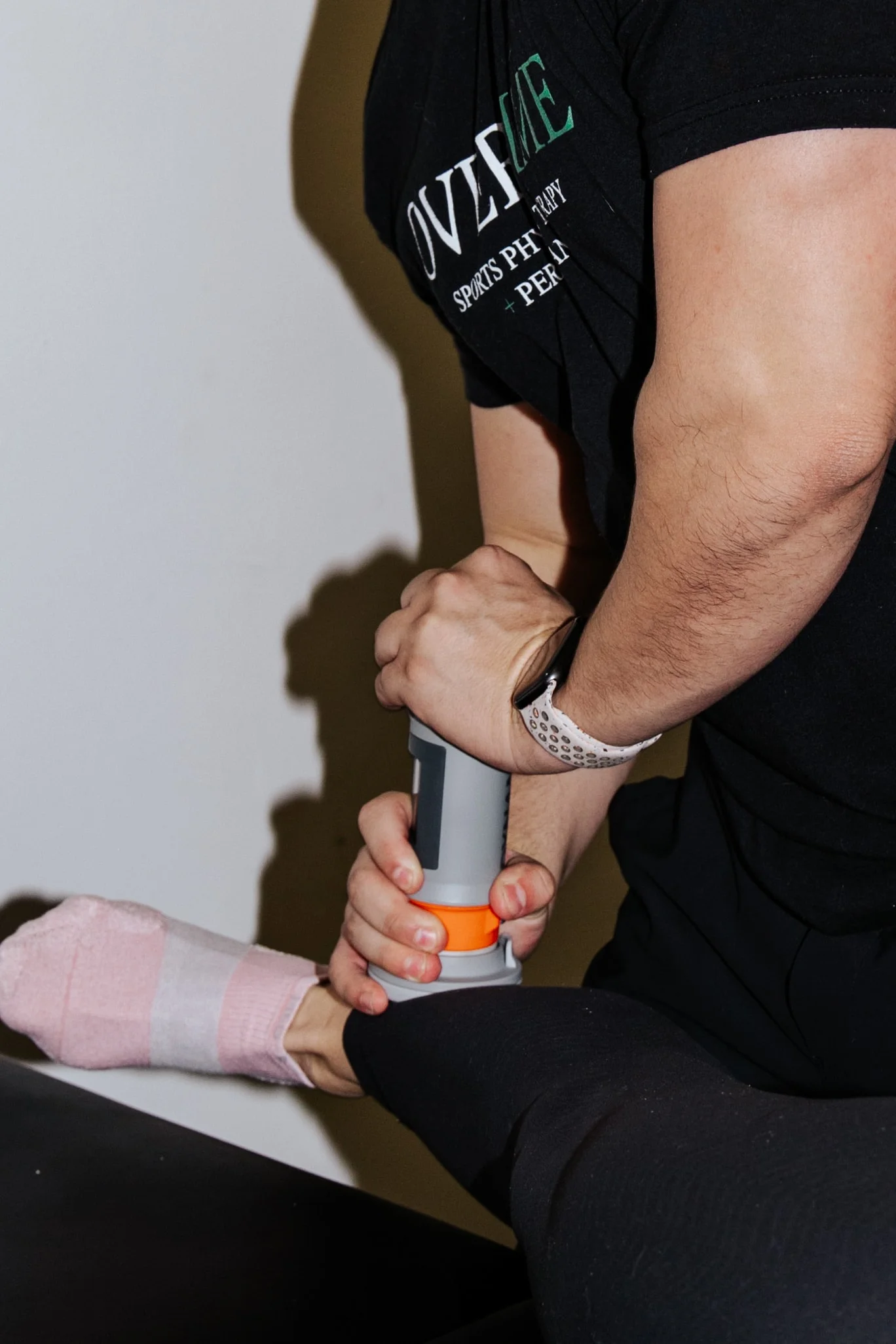
The work behind the comeback
Rebuilding your miles starts with rebuilding what supports them: strength, control, and the ability to tolerate repeated impact.
AlterG anti-gravity treadmill
Adjustable body-weight support helps introduce running gradually with less impact on joints and bones.
The AlterG uses an air-pressure system that can support up to 80% of your body weight. We tailor support, speed, and duration to your injury and response, then adjust as your tolerance grows.
A controlled place to reconnect with running—and build toward full-body-weight miles.
Transition to land running
The plan connects your in-clinic progress with what happens between visits.
Begin with walk-run intervals or an appropriate entry point for you, with clear effort and recovery guidance.
Review how you feel during and after running. Adjust duration, frequency, terrain, and eventually speed as your capacity grows.
Know when to modify or progress, and text your PT when you're unsure. Your next run shouldn't depend on guesswork.
Running gait assessment
When there's a specific question to answer, slow-motion video can help us look more closely at your running.
We consider what we see alongside your symptoms, strength, history, and goals. That information helps guide exercises, running-load changes, or cues we test together.
Support every step of the way
For bone stress injuries, we also consider training changes, fueling, recovery, and bone health, with referral or coordination when needed.
Meet your Sports PTsYour next step
From those first runs back to the routes, distances, and races you miss, let's talk about where you are now and where you want to go. Start with a free, 15-minute phone consultation.